Anti-reflective coating is one of the most frequently mentioned terms by optical lens buyers, and it’s also a crucial aspect of ensuring the quality control of optical lens suppliers.
Since users demand lenses with anti-reflective coatings, do you know why? Why is the anti-reflective coating so important?
This article will explain from the perspective of an optical lens manufacturer, allowing users to understand it more clearly.
1. What is an anti-reflective coating?
An anti-reflective coating is a thin film applied to the surface of a lens by a lens manufacturer to improve its visual effect.
It can also protect the lenses from scratches and increase their hardness. HMC and SHMC, which lens suppliers often refer to, both refer to anti-reflective coating.
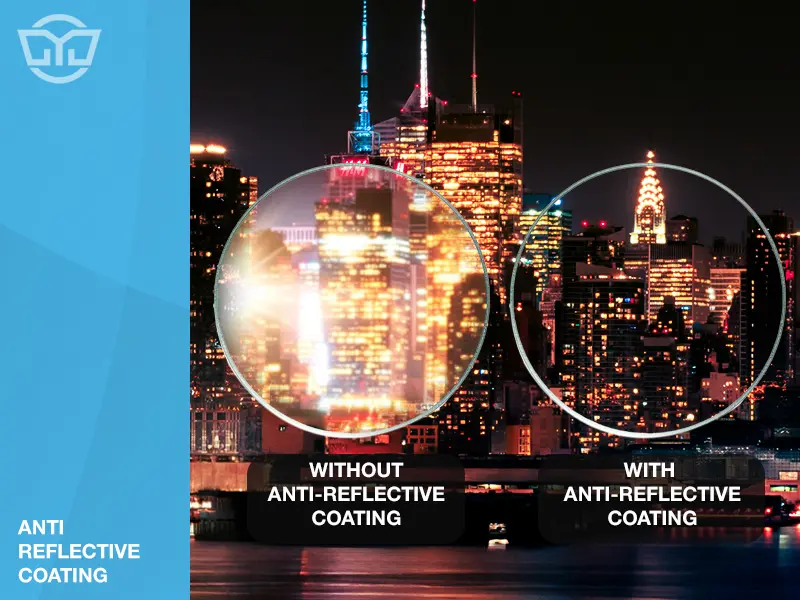
The image below shows the obvious difference between with anti-flection coating and without anti-flection coating :
2. What is the function of anti-reflective coating?
– Improved Clarity:
Anti-reflective coatings reduce light reflection, allowing more light to pass through the lens, resulting in a clearer image and sharper details.
– Reduced Glare (especially noticeable at night/in bright light):
In bright light environments, anti-reflective coatings also reduce stray light entering the eyes, improving visual comfort and reducing eye fatigue.
– Increased Light Transmittance:
Ordinary lenses have a light transmittance of approximately 92%, while AR lenses can reach 98%+. The AR coating significantly improves the light transmittance of the lens.
– Enhanced Appearance:
The anti-reflective coating makes the lens surface virtually free of reflections., giving them a more premium look. This is especially suitable for professional video conferencing and business scenarios.
-Protect lenses:
The anti-reflective coating increase their hardness and protect the lenses from scratches.
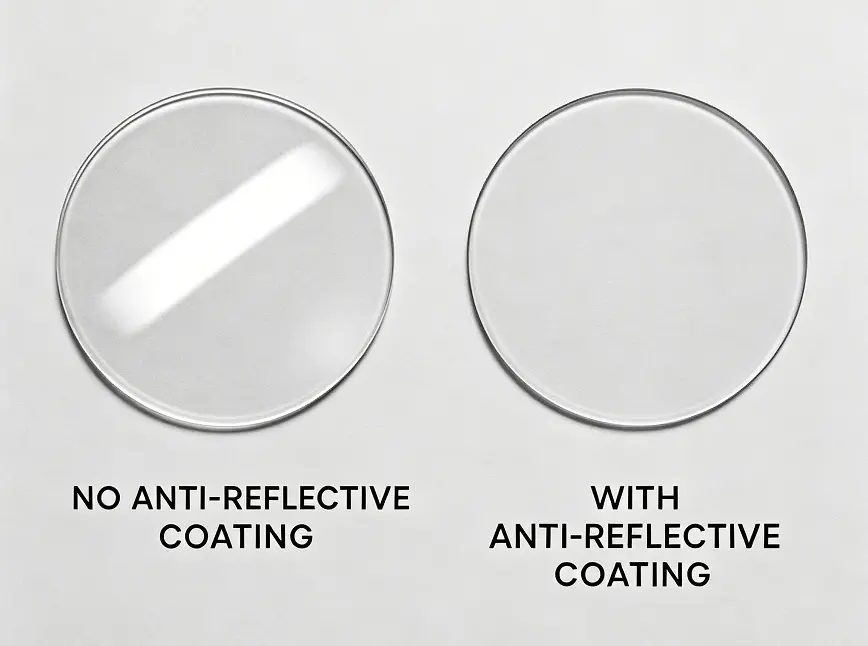
Below is a comparison of lenses with and without anti-reflective coatings, allowing you to visually see the differences:
3. What types of anti-reflective coatings are available?
For lens manufacturers, anti-reflective coatings typically include HMC and SHMC.
Based on color, they can be further subdivided as:
HMC green/HMC blue
SHMC green/SHMC blue/SHMC X6
4. How to choose the right anti-reflective coating?
For simple anti-reflective functionality, HMC is sufficient. HMC blue coating has slightly lower transparency than HMC green coating. There are no other differences, and distributors can choose based on the preferences of their local customers.
For better performance, choose SHMC, which offers higher transparency and water resistance. SHMC X6 lenses have a shallower reflection and a more aesthetically pleasing appearance.
Below is a comparison video between HMC and SHMC X6 lens for your reference:
This article only provides a brief overview of how to choose a suitable coating. For detailed guidance, please refer to below article:
If you want to know more information please Contact us now for more information!